This article looks at the Brookwood Memorial 1939-1945 which commemorates nearly 3,400 men and women who lost their lives in the Second World War and have no known graves. As well as looking at the history of the memorial, this page will help you to research soldiers of the British Army commemorated on it. In addition, I have written a series of guides to help you research soldiers who served in the British Army during the war:
I also offer a Second World War Soldier Research and Document Copying Service.
The Brookwood Memorial 1939-1945
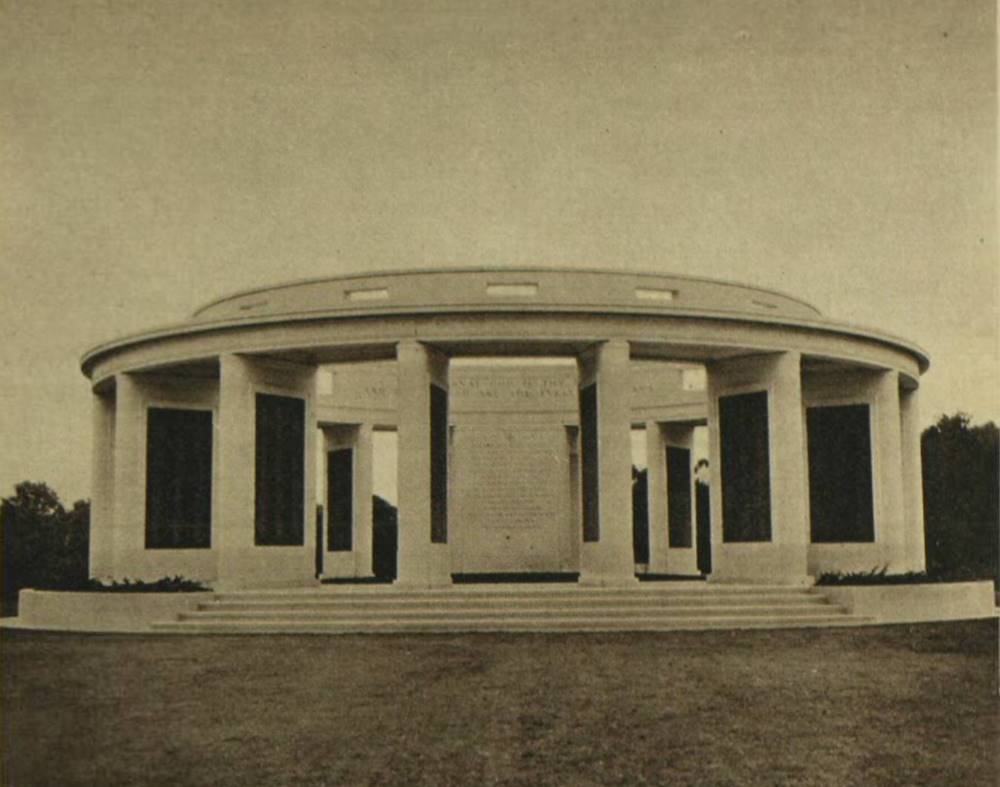
The Brookwood Memorial 1939-1945 commemorates nearly 3,400 men and women who served in the British and Commonwealth armies who have no known graves. While the memorial often has the years 1939-1945 after its name to differentiate it from the First World War Brookwood Memorial, it commemorated hundreds of soldiers who died after the war in 1946 and 1947 as well. The Brookwood Memorial 1939-1945 doesn’t cover those who served in the British or Commonwealth navies or air forces. The Brookwood Memorial was designed by Ralph Hobday (1899 – 1975) who also designed the Ambon and Jakarta War Cemeteries in Indonesia. On 25 October 1958, the memorial was unveiled by the queen. The Brookwood Memorial stands in the grounds of the Brookwood Military Cemetery, opposite the village of the same name. Trains from Waterloo run regularly during the week with the journey taking around forty minutes. There is an entrance to the cemetery close to the station. If you’re driving, the memorial can be seen on your right as you enter from Pirbright village.
Most of those commemorated on the memorial served with the British Army, though two hundred served in the Canadian Army, thirty with the Indian Army and eight with the Union Defence Force (South Africa). There is also a single Australian, Lieutenant William Albert Dawson of the Australian Army Ordnance Corps who died on 26 March 1944. Those commemorated on the memorial lost their lives both in the United Kingdom and across the world. Many were killed when the ship they were travelling in was sunk, were lost overboard or buried at sea. Others were killed when the plane in which they were travelling in was shot down or lost. Some of those commemorated died in raids, including twenty-three Palmach commandos who disappeared during Operation Boatswain, an amphibious raid on Tripoli. The memorial also commemorates those of the British Army who died in the Norwegian Campaign and have no known graves.
One of the Indian officers commemorated is Lieutenant-Colonel Alexander Clifton Craighead who drowned with his twelve-year-old daughter when the ship they were travelling in was torpedoed on 18 March 1943. A report of their deaths was published in The Dundee Courier and Advertiser under the header “Fife Father and Daughter Lost At Sea” on 27 April 1943:
During a storm their ship was torpedoed. Their daughter was accommodated in a lifeboat, but as it was being lowered she was seen by parents to overbalance and fall into the raging sea. Her life-jacket kept her afloat and sailors made an effort to effect a rescue.
Meantime Mrs Craighead had been placed in another lifeboat, and the remainder of the passengers had to jump from the ship and make for the boats and rafts. Colonel Craighead was seen to jump, only to be caught by a huge wave and carried away. Both he and his daughter are now presumed to be lost.
Another soldier commemorated on the memorial who was lost at sea was Captain Christopher Michael Cadogan, shown below on his wedding day. This photograph was published in The Bystander on 24 July 1940 which can be viewed on Findmypast. Christopher was last seen clinging to a raft when his ship was sunk near Cyprus on 23 June 1941. He was serving with Special Operations Executive at the time of his death. Cadogan’s personnel file is held at the National Archives.
 Many of those commemorated on the memorial weren’t killed in action but died in accidents, especially if it involved a large body of water, sea, river, lake, etc. One of these soldiers was 3250598 Rifleman Neil MacInnes of the 6th Battalion The Cameronians (Scottish Rifles) who was drowned on Christmas Day 1941. The Battalion’s war diary reported:
A fatal accident took place at Loch Earn about a mile from St. Fillans on the road to Lochearnhead, when a 30-cwt truck slipped into the Loch and became completely submerged. The driver, Rifleman MacInnes, who was a non-swimmer, was drowned in spite of an attempt by one of his comrades to rescue him. The vehicle was extracted from the Loch a few days later.
Another soldier who died in an accident was 2094099 Lance-Corporal Ronald Sydney Perry of the 225th Field Company Royal Engineers. Ronald was killed by an accident with a beach mine, most likely at Barton-on-Sea, Hampshire on 14 September 1940. The two men he was killed with, Second Lieutenant Vernon Winter and Serjeant Frederick Doody both have graves. Also commemorated on the memorial is 1544154 Gunner Francis Albert Fry of the 12th Light Anti-Aircraft Regiment. On 8 September 1941, Frances was “Presumed to have been lost overboard” when his Regiment was on board a ship travelling from Durban, South Africa, to Bombay, now Mumbai, India. Another soldier commemorated on the Brookwood Memorial is 2979972 Private George William Gardiner of the 4th Field Ambulance Royal Army Medical Corps. George was fatally injured in an accident on board the Orduna on 15 April 1942 and died shortly afterwards. The Orduna had only just sailed from Gourock, Scotland as part of a convoy and George was buried at sea the next afternoon.
Researching A Soldier who is Commemorated on The Brookwood Memorial
The following information applies to all those who died while serving with the British Army and are commemorated on the Brookwood Memorial. There are six steps to start your research and you’ll be able to complete the first three online:
- Check their entry in the Commonwealth War Graves Commission’s database
- Search for them in the War Office casualty lists on Findmypast
- Search the British Library’s digitized newspaper archive on Findmypast for a report of their death
- Order a copy of their service record from the Ministry of Defence
- View their unit’s war diary entry for the date of their death
- See if there is a file on missing soldiers from that corps or regiment in the WO 361 series
First look for their entry on the Commonwealth War Graves Commission’s database. Every soldier who appears on the memorial will have an entry which will record a variety of information. This can include but is not limited to their name, number, rank, regiment or corps, exact unit, age, honours and awards, date of death, and their next of kin. Once you have their number, search it on the War Office casualty lists on Findmypast. This will provide you with a lot of the same information but will also record whether a soldier was killed in action, died of wounds, was reported missing, or “died”. If they were reported as having died, this means their death wasn’t the result of enemy action but due to drowning, an accident, natural causes, etc.
You can also search for a report and possible photograph of a soldier in the British newspaper archives which is also available to search on Findmypast. The British Newspaper Archive is digitizing the British Library’s collection but it’s a very slow process and only a fraction of newspapers from the Second World War have been digitized so far. However, more are being constantly added and there are thousands of photographs of soldiers already digitized. Newspapers will often provide information regarding the circumstances which led to a soldier’s death.
If you want to research a soldier in depth, then you can order a copy of their service record from the Ministry of Defence or National Archives. As the soldiers commemorated on the Brookwood Memorial died in service, you don’t need to provide a copy of their death certificate. No permission is needed from the next of kin either and the process is straightforward. A service record will contain a lot of information you will not be able to find elsewhere. I’ve written a guide to help you order a British Army service record.
If you know which unit a soldier was serving with at the time of their death, you can check that unit’s war diary. A war diary was written by an officer of a unit and recorded its daily activities. Many of the soldiers commemorated on the memorial died in accidents and the circumstance which led to their deaths are often recorded. Though, the amount of detail will vary. War diaries are held at the National Archives in London and I offer a copying service for these documents.
Depending on the circumstances in which a soldier died, there may be a relevant file in the series WO 361: Enquiries into Missing Personnel, 1939-1945 War at the National Archives. Most of these files concern corps or regiments taking part in campaigns which have their own memorials to the missing, so won’t be of use to the Brockwood Memorial. However, there are also files on specific ships which were lost and a file on the missing of the Norwegian Campaign. The files often report the last circumstances in which a soldier was seen so can hold the clue in finding out what happened to a soldier. I offer a copying service for these documents.