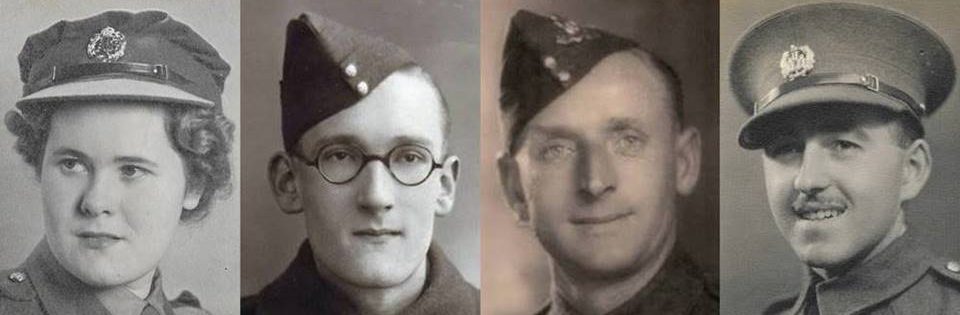
This article looks at the Chungkai War Cemetery, one of two cemeteries cared for by the Commonwealth War Graves Commission in Thailand. If you’d like to learn how to research the British soldiers buried in Chungkai War Cemetery, I’ve written a series of guides to help:
I also offer a Second World War soldier research and document copying service.
Chungkai War Cemetery
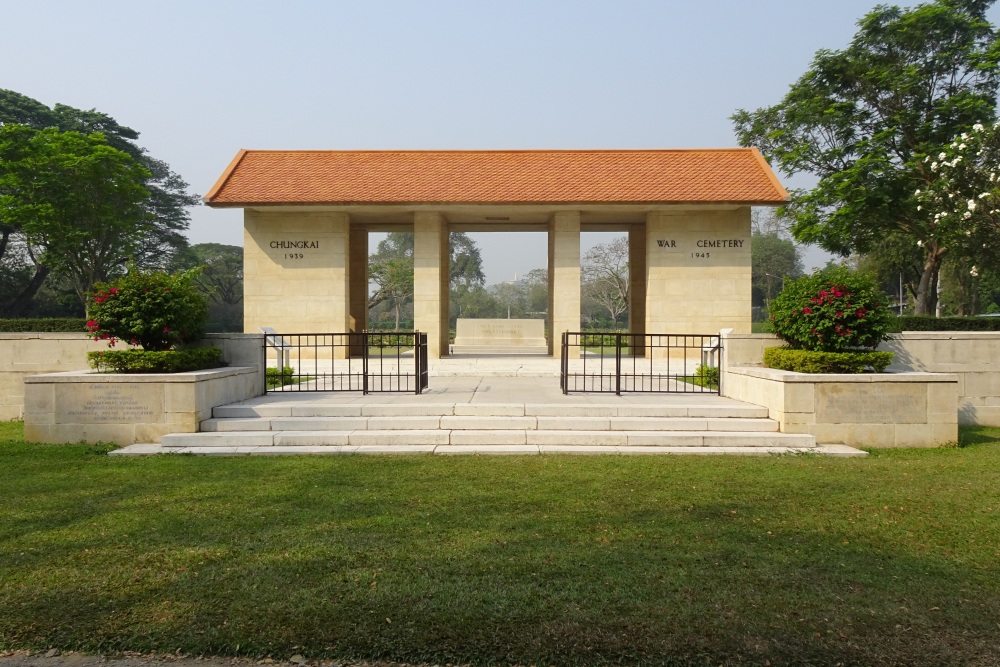
Visiting Chungkai War Cemetery
Chungkai War Cemetery is located on the outskirts of Kanchanaburi, a town in the Kanchanaburi Province of Thailand. Kanchanaburi is 87 miles northwest of Bangkok, and there are a variety of transport options from the capital. Along with the far larger Kanchanaburi War Cemetery, Chungkai War Cemetery is one of only two cemeteries cared for by the Commonwealth War Graves Commission in Thailand. Kanchanaburi is the site of the infamous Bridge on the River Kwai, with the cemetery located about three and a half miles away. While it is possible to visit both cemeteries on a day trip from Bangkok, it is worthwhile spending a couple of days in Kanchanaburi if you have the time. There’s a lot to see both in the town and surrounding area.
If you don’t have your own transport, then I’d recommend using a taxi to visit the cemetery. I use Grab to order a taxi, as it offers a hassle-free way to travel in the town, with the price known in advance. As Kanchanaburi is hot and humid all year round, I’d recommend visiting the cemetery early in the morning if possible. There are shops opposite the cemetery where you can buy water and snacks. While the Commonwealth War Graves Commission warns prospective visitors of the possibility of snakes, I’ve never seen any. The cemetery is always open and access is available by both steps and a ramp.
History of Chungkai War Cemetery
Chungkai War Cemetery contains 1,426 Commonwealth and 313 Dutch burials. Most of those buried in the cemetery lost their lives during the construction of the Burma-Siam Railway. After the Japanese conquest of Burma (December 1941 – May 1942), a railway line was built to link Burma (Myanmar) and Siam (Thailand). This would allow Japan to move supplies, equipment, and men across Siam and into Burma. To construct the railway, the Japanese used Allied prisoners of war, as well as forced labourers from Burma, the Dutch East Indies, Malaya, and Siam. It is estimated that between 80 and 100,000 civilians died during the construction of the railway, along with approximately 13,000 prisoners of war.
Chungkai was one of the base camps for those working on the railway line and had its own hospital. As many soldiers in the camp died from disease or malnutrition, there was already a large cemetery at Chungkai at the end of the war. Shortly afterwards, it was decided to concentrate the graves of prisoners of war who had died while building the railway in Chungkai and Kanchanaburi War Cemeteries. Initially, Americans were buried at Chungkai but their bodies were revaluated. Colin St Clair Oakes was given the task of designing the cemetery. He designed a large number of cemeteries and memorials in Asia, including the Kanchanaburi War Cemetery, and Singapore Memorial.
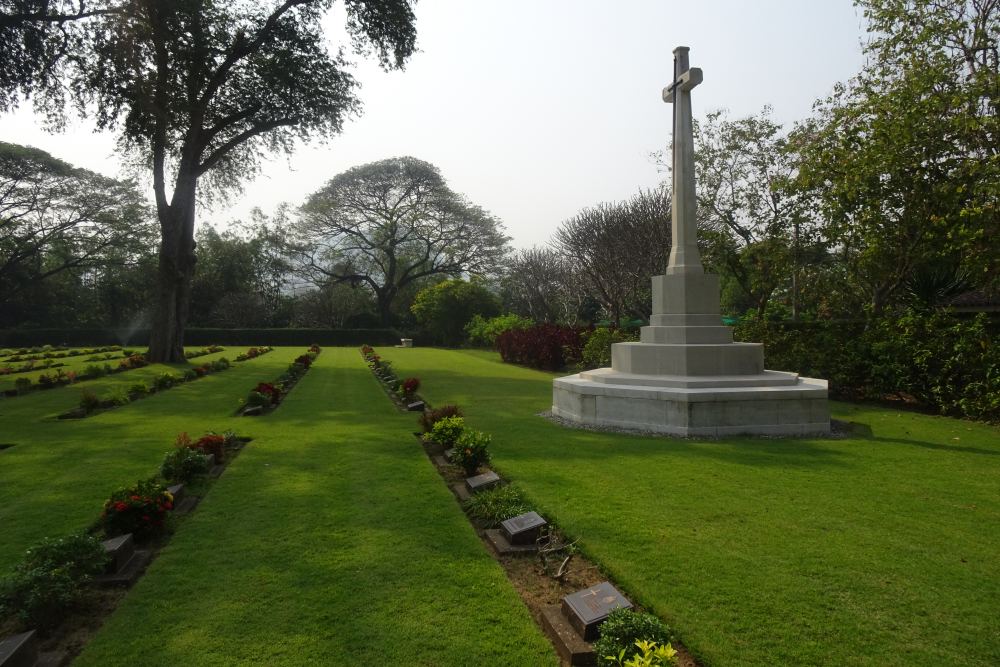 The Cross of Sacrifice at Chungkai War Cemetery
The soldiers buried in Chungkai War Cemetery
Most of the British soldiers who are buried in Chungkai War Cemetery died between April 1943 and April 1944. For the most part, they were soldiers who had been taken prisoner during the Malayan Campaign. Fought between 8 December 1941 and 15 February 1942, the campaign came to an end with the surrender of over 80,000 British and Commonwealth service personnel at Singapore. A large proportion of those buried in the cemetery had been serving with the 18th Infantry Division when they were captured at Singapore. They include:
- 98 soldiers from the 1st and 2nd Battalions Cambridgeshire Regiment
- 106 soldiers from the 4th, 5th, and 6th Battalions Royal Norfolk Regiment
- 130 soldiers from the 4th and 5th Battalions Suffolk Regiment
- At least 28 soldiers from the 135th (East Anglian) (Hertfordshire Yeomanry) Field Regiment Royal Artillery
- At least 26 soldiers from the 125th (Northumbrian) Anti-Tank Regiment Royal Artillery
Other units which are represented at the cemetery include the 1st Battalion Leicestershire Regiment with 35 burials and the 2nd Battalion East Surrey Regiment with 20. Both battalions served as part of the 11th Indian Infantry Division. There are also 352 soldiers from the Royal Artillery buried in the cemetery. The earliest death for the soldiers buried in the cemetery was Bombardier Kenneth Walter Dyson of the 80th Anti-Tank Regiment who died on 17 July 1942. A Graves Concentration Report recorded that Kenneth was one of the soldiers reburied in Chungkai War Cemetery after the war. Sapper Victor Harold Jones of the 41st Fortress Company Royal Engineers who was recorded as dying on 2 November 1945 was the last death. However, the date of his death on the Commonwealth War Graves Commission is incorrect. Victor’s Royal Engineers Casualty Card recorded he “Died while a prisoner of war in Japanese Hands” from avitaminosis with his next of kin notified in September 1945. It often took years before the fates of soldiers taken prisoner of war became known, which is why there can be discrepancies in the information recorded.
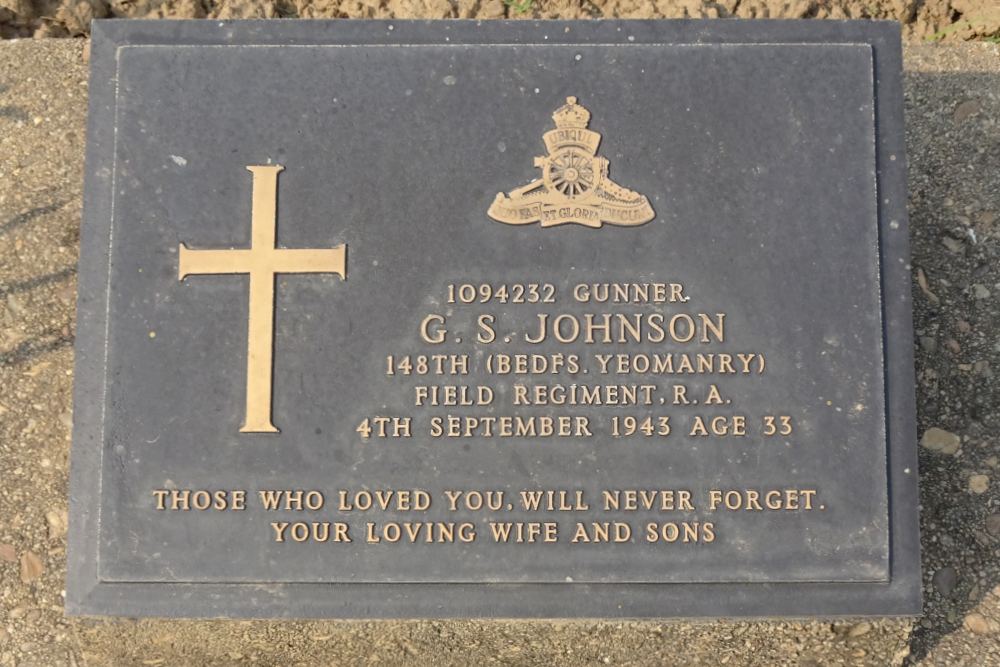 One of the soldiers buried in the cemetery is Gunner George Sidney Johnson who was taken prisoner while serving with the 148th (Bedfordshire Yeomanry) Field Regiment of the Royal Artillery. This was one of the field regiments of the 18th Infantry Division which was captured when Singapore fell on 15 February 1942. The 148th Field Regiment was part of the Territorial Army, which pre-war recruited its soldiers from the Bedfordshire area. A lot of the soldiers captured would have been pre-war territorials who trained on a part-time basis after work, at weekends, and attended an annual summer camp. George’s Royal Artillery Casualty Card, which is available on Findmypast, recorded he died of avitaminosis at Chungkai. His death was due to a lack of essential vitamins. This was a common cause of death for prisoners of war in Japanese hands due to their poor diet.